
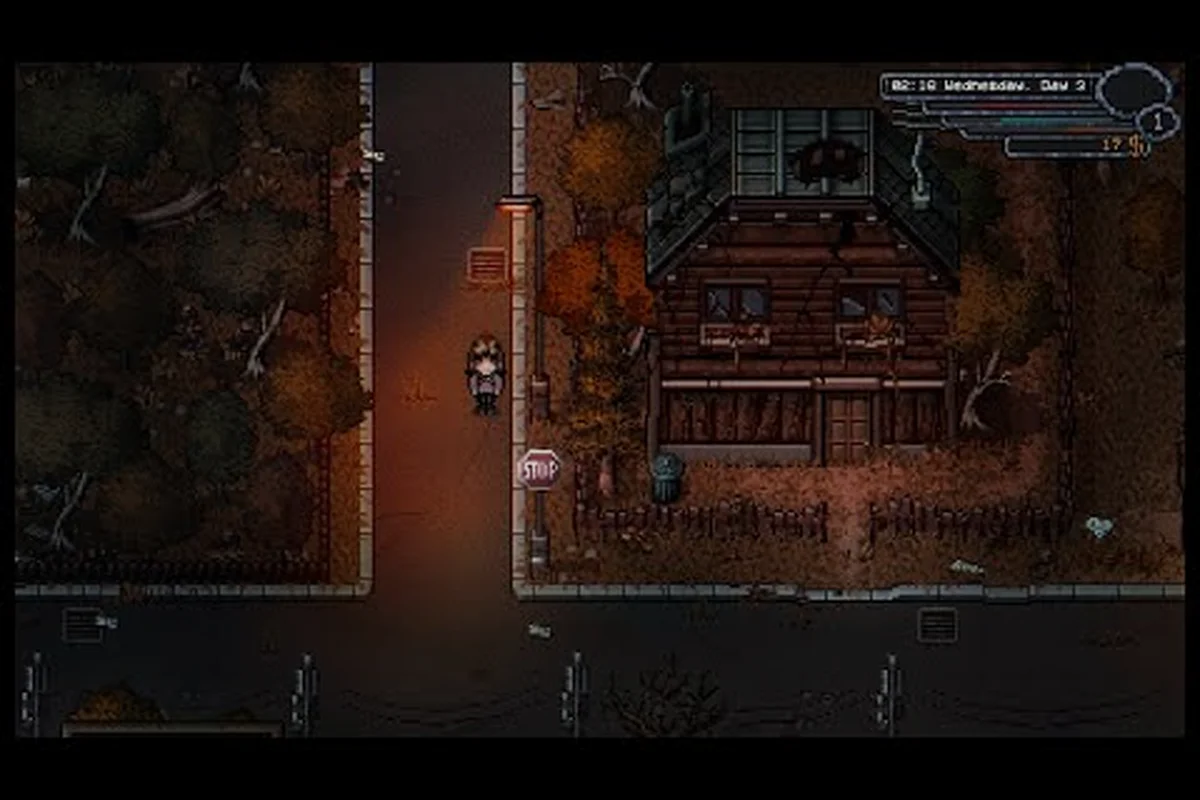
The Welcome to Elderfield lore guide begins with a town that smiles on the surface and suffers in its sleep. Beneath the rolling fields, an ancient cycle of slumbering entities stirs each night, and the cozy routines of farming, fishing, and neighborly chats hide a creeping dread that rewards attentive players with one of the most unusual narrative blends on Steam.
Welcome to Elderfield Story Explained: Setting, Tone, and Core Conflict
Welcome to Elderfield drops you into a quiet valley town that was never as peaceful as its settlers believed. According to the official Welcome to Elderfield page on Steam, the colonial founders built their community atop something older than any map, sealing slumbering entities beneath the soil rather than destroying them. The town has carried that bargain ever since, trading quiet harvests for nightly intrusions that most citizens refuse to acknowledge while awake.
The tone deliberately subverts cozy farming sim conventions. Kwalee's spotlight on the narrative depth of Welcome to Elderfield highlights how the developer weaves psychological horror and existential dread into daily farm routines, so planting crops, paying town taxes, and exploring the forest all carry a faint undercurrent of wrongness. Players gradually notice that time behaves oddly after midnight, sleep paralysis visions interrupt the loading screen between days, and the radio static that hums during cutscenes contains reversed whispers when played backward, a detail community lore hunters documented in the Steam discussions for Welcome to Elderfield.
The core conflict of this Welcome to Elderfield story explained is simple on the surface: you must decide whether to break the founding bargain or renew it. Practically, that choice manifests through donations to the town shrine, your response to nocturnal visitations, and which of the multiple endings you steer toward. The narrative never punishes curiosity, but it does punish inattention, because every meaningful secret sits behind a routine that players are tempted to skip.
| Narrative Layer | Surface Appearance | Hidden Reality | When Revealed |
|---|---|---|---|
| Farming | Crop growth, seasonal income | Soil is feeding on dreams | After 14 in-game nights |
| Sleep | Daily energy recovery | Sleep paralysis visions | First full sleep after Day 3 |
| Town Mayor | Friendly quest giver | Bearer of founding pact | Mid-Act dialogue branch |
| Forest | Resource gathering area | Approach to the seal | Deep forest shortcut unlocked |
| Radio | Ambient background | Reversed Old Gods chants | Inverted playback discovery |
The Welcome to Elderfield plot summary that veteran players tend to share emphasizes that the game never tells you outright what is happening. Instead, hand-drawn manga-style flashback frames, a melancholy lofi soundtrack by the musician Dated, and small environmental details (cracked gravestones, an extra chair at every table) let the dread accumulate. By the time you confront the first named horror, you have already been part of the cycle for several in-game weeks, which is what makes the reveal feel earned rather than scripted.
Old Gods Mythology in Welcome to Elderfield: Pantheon, Symbols, and Sleep Cycle
The Welcome to Elderfield Old Gods mythology takes direct inspiration from Lovecraftian cosmic entities, but it filters those ideas through a small-town lens that feels more Junji Ito than Miskatonic University. The so-called Old Gods are not gods in the worshipful sense; they are pre-human intelligences sealed underground by the original settlers after a catastrophe the town archive only describes as "the Hush." The slumber is not death, and every generation of Elderfield residents has served, knowingly or not, as a low-level anchor keeping the seal intact.
Players who dig into the Welcome to Elderfield Old Gods mythology find that the slumbering entities respond to three symbolic channels: water, silence, and forgetting. Water is the most concrete, because the fishing mechanics, outlined in detail in the fishing guide for Welcome to Elderfield, surface fish that should not exist in freshwater and that occasionally whisper when reeled in. Silence governs the dream sequences, where loud or panicked responses to the visions only deepen them, while forgetting explains why so many townspeople insist nothing is wrong despite the visible cracks in their routines.
Who Are the Old Gods in Welcome to Elderfield?
Who are the Old Gods in Welcome to Elderfield? The community has settled on a working list of four named entities that the game references through shrine carvings, audio stingers, and the Old Gods mode combat set pieces, which players can review in the boss guide for Welcome to Elderfield. Each one corresponds to a different fear archetype, and each one is reachable through a different combination of donations, dialogue choices, and exploration paths.
-
The Hushed Shepherd — Guardian of sleep, appears in the paralysis visions on early nights, and is associated with the radio static motif.
-
The Drowned Cartographer — Water-themed entity tied to the river and fishing spots, and connected to maps that update on their own.
-
Moss Canny — Forest-rooted horror that grows in real time when you linger in the deep grove, and whose boss fight is the first major Old Gods encounter.
-
Mr Nightmare — Late-game emissary of the waking pantheon, the closest the game gets to a true final boss before the endings branch.
Slumber Cycle and Player Influence
The slumber cycle in this Welcome to Elderfield lore guide is best understood as a four-phase clock. The phases reset every in-game week, and your actions during waking hours influence how aggressive the nightly phases become. Community testing shared in the Steam lore theories thread suggests that donating more than 60% of weekly income to the town shrine advances the cycle toward the Quiet phase, while ignoring shrine duties pushes it toward the Stirring phase.
| Slumber Phase | In-Game Days | Player Experience | Recommended Response |
|---|---|---|---|
| Hush | Day 1-2 | Calm nights, brief static | Establish routines |
| Whisper | Day 3-5 | First visions, minor oddities | Talk to townsfolk |
| Stirring | Day 6-7 | Forest activity, dream NPC visits | Prepare combat loadout |
| Quiet | Day 8 (storm) | Old Gods encounters, ending trigger | Make pact choice |
Cosmic Horror Themes and Lovecraftian Horror Influences in Welcome to Elderfield
Welcome to Elderfield Lovecraftian horror is felt more than lectured about, and the Welcome to Elderfield cosmic horror themes borrow the Sanity loss metaphor from classic cosmic horror but replace the stat with sleep quality. Instead of a visible Sanity meter, the game tracks how steadily you maintain a daily routine, and breaking the routine (skipping sleep, ignoring a neighbor, refusing to fish for a full week) is what weakens your resistance to the Old Gods.
The Lovecraftian influences show up in three places that new players often overlook. First, the town archive, accessible from the mayor's office, contains misprinted dates and a sealed appendix that, when read in the right order, spells out a non-Euclidean geometry describing the seal. Second, several NPCs have names that echo classic horror surnames, and their dialogue loops reveal buried guilt about what their grandparents did during the founding. Third, the soundtrack by Dated uses reversed chants, vinyl crackle, and minor key piano patterns that subtly mirror the forbidden-archive trope without ever feeling like a direct copy of any specific Lovecraftian story.
Players looking for a practical foothold in this part of the Welcome to Elderfield lore guide should treat cosmic horror as a management problem. Sleep is your most important resource, because nightmares reduce the efficiency of every other activity the following day, and the difficulty settings guide for Welcome to Elderfield explains how Cozy mode softens the stamina drain while Old Gods mode removes the safety nets entirely.
Narrative Tropes Reused in Welcome to Elderfield
The Welcome to Elderfield plot summary that most fans share tends to group its narrative tropes into a short list that maps cleanly onto cosmic horror traditions, while still feeling native to the farming sim genre.
-
Inherited sin — You arrive as a newcomer, not an heir, but the founding pact is treated as a communal debt that you inherit the moment you rent the farmhouse.
-
The unreliable neighbor — NPCs lie kindly, omitting the parts of the truth that would break the town's fragile denial.
-
Knowledge as infection — Reading the wrong archive pages changes dialogue and triggers extra sleep paralysis events.
-
The hollow ritual — Shrine donations, tax payments, and the seasonal festival all reenact a sealing ritual without anyone remembering why.
-
The false ending — Multiple early-game endings exist, each more "cosmic horror comedy" than satisfying, before the true endings open up later.
Welcome to Elderfield Endings, Player Choices, and Hidden Lore Mechanics
Welcome to Elderfield story explained at the ending level is a branching path with at least four confirmed outcomes, with strong community evidence for a fifth hidden outcome. The branching is driven less by a morality meter and more by three persistent choice flags: your shrine donation ratio, your response to the first sleep paralysis vision, and whether you repair or abandon the founding stone in the deep forest, which the deep forest exploration guide for Welcome to Elderfield covers from a navigation perspective.
The four confirmed endings in this Welcome to Elderfield plot summary are commonly listed as Salvation, Pact, Fade, and Subjugation, while the fifth hidden outcome (sometimes called the Drowned Hush) is gated behind a fishing-focused route that the fishing guide for Welcome to Elderfield references indirectly through rare catch locations.
| Ending | Key Trigger | Alignment | Final Boss Interaction |
|---|---|---|---|
| Salvation | Repair founding stone, low shrine donation | Cozy, optimistic | Seal the Old Gods permanently |
| Pact | Moderate shrine donation, mayor's path | Neutral, custodial | Renew the cycle knowingly |
| Fade | Skip nights, ignore neighbors | Quiet, melancholy | Walk into the forest, no return |
| Subjugation | Maximum shrine donation, accept visions | Hostile, cosmic | Replace an Old God as new entity |
| Drowned Hush (hidden) | Fish all rare catches, repair seal | Secret, bittersweet | Bargain with the Drowned Cartographer |
Practical Tips for Lore Hunters
Lore hunters in Welcome to Elderfield treat the first two in-game weeks as a setup phase, and most of the discoverable secrets require a steady routine rather than grinding. According to community data shared in the Steam lore discussions for Welcome to Elderfield, players who skip random encounters, avoid the mayor, and rush the deep forest usually miss three of the seven named dream sequences and at least one of the archive pages needed for the hidden ending.
-
Keep a stable sleep schedule for the first 7 in-game nights to unlock the first archive page reliably.
-
Donate between 30% and 50% of weekly income to the shrine; extreme values lock you out of branching flags.
-
Talk to every named neighbor at least twice before Day 10 to surface the inherited-sin dialogue branches.
-
Fish in the river at least once per week, because the Drowned Cartographer hook is gated on cumulative catches rather than a single day.
-
Save before the storm on Day 8; this is the single hardest soft-lock point in the cycle and the one where most players first encounter Mr Nightmare in a meaningful way.
New players who feel overwhelmed by the layered symbolism should bookmark the beginner guide for Welcome to Elderfield for the first week and return to this Welcome to Elderfield lore guide once they have triggered the first Whisper phase, because the mechanics and the meaning finally click together after the first true sleep paralysis sequence. Veteran players, on the other hand, tend to use this lore guide as a checklist to confirm they have not missed any of the seven dream sequences before committing to an ending path.
Frequently Asked Questions
What is the Welcome to Elderfield lore guide for?
A Welcome to Elderfield lore guide is a structured walkthrough of the town's hidden mythology, the Old Gods sealed beneath Elderfield, the Lovecraftian horror influences, and the branching endings. It helps players connect the daily routines (farming, taxes, sleep) to the cosmic horror plot so they do not miss archive pages, dream sequences, or the secret fifth ending gated behind fishing and shrine choices.
Who are the Old Gods in Welcome to Elderfield?
The Old Gods are pre-human slumbering entities sealed underground by Elderfield's colonial founders after an event the town calls the Hush. The four confirmed Old Gods are the Hushed Shepherd, the Drowned Cartographer, Moss Canny, and Mr Nightmare, each tied to a different symbolic channel (sleep, water, forest roots, and waking dread respectively) and to a different boss encounter in Old Gods mode.
Is Welcome to Elderfield based on Lovecraftian horror?
Welcome to Elderfield draws heavily on Lovecraftian horror and cosmic horror themes, but it filters them through a cozy farming sim structure and Junji Ito-style manga art. The result is a slow-burn dread where sleep quality, inherited sin, and inherited knowledge replace the traditional Sanity stat, and where the town itself behaves as the unreliable narrator typical of cosmic horror.
How many endings does Welcome to Elderfield have?
Welcome to Elderfield has at least four confirmed endings (Salvation, Pact, Fade, and Subjugation) and one hidden fifth ending known as the Drowned Hush. The endings are decided by your shrine donation ratio, your response to the first sleep paralysis vision, and whether you repair the founding stone in the deep forest, with the hidden ending requiring a full fishing completion run.
Does the Welcome to Elderfield story explained change between Cozy and Old Gods modes?
The Welcome to Elderfield story explained follows the same narrative beats in both Cozy and Old Gods modes, but Old Gods mode removes the safety nets, which makes the Stirring and Quiet phases of the slumber cycle more dangerous and exposes the late-game Old Gods boss encounters earlier. Cozy mode softens the horror elements and gives players more room to explore the lore at a comfortable pace.